
"Pressure" | 2009-02-22 |
| - Reviewed By User: A38ZTUNQJVGP6S |
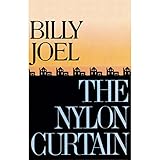
The Nylon Curtain is 41minutes and 57 seconds long and was released on September 23, 1982. The Nylon Curtain reached #7 on the U.S. Billboard 200 Album chart and went Double Platinum. The album charted three songs from. The Nylon Curtain seems to be geared to an adult contemporary style of music. The only two songs that sound like rock songs are Allentown and Pressure. Otherwise it is mostly easy listening. This was Billy Joel's first album to be digitally recorded, mixed and mastered. I will give it an A.
Side One
Allentown #17 U.S. Billboard Hot 100 Singles #19 U.S. Billboard Adult Contemporary Singles #28 U.S. Billboard Rock Tracks Laura Pressure #20 U.S. Billboard Hot 100 Singles #8 U.S. Billboard Rock Tracks Goodnight Saigon #59 U.S. Billboard Hot 100 Singles
Side Two
She's Right On Time A Room of Our Own Surprises Scandinavian Skies Where's the Orchestra? |
| |
"Billy's Most Challenging And Artistically Satisfyting Effort." | 2008-12-21 |
| - Reviewed By anthonynasti |
While most Billy Joel listeners would classify 1978's "The Stranger" as his magnum opus, it's hard to argue the artistic merits of 1982's "The Nylon Curtain." After his last album, 1980's light hearted "Glass Houses," Joel wnet through a series of events that forced to think more seriously for his next project. Whereas that last album had songs dealing with phone sex and party crashing, "The Nylon Curtain" represents the thinking man's Blly Joel, with numbers dealing with topics ranging from recession to relationship to war to drugs. (One of the key events that influenced the production of this album was the death of John Lennon, as the album is heavily Fab Four influenced with John's style being the most apparent.)
The album begins with the working class, Springsteen-esque anthem "Allentown." While its chugging rhythm and singalong melody made it a perfect pop single (it was the biggest hit iff the album and Billy still does it at every concert he does), it is lyrically much deeper than most of what was on the charts in the 1980s', a moving tale of the famous Steel Workers layoff in the 1950s'. Joel perfectly captures the lost hope and blind range of its subjects, and the result is one o his best songs.
"Laura" is up next, and it's one of Joel's most inspired pieces ever. The Fab Four's influence is very much present on this track, from the structure of the melody to the "phasing" effects on the instruments to the "oh-oh-oh-oh" backing vocals, this song would've fit quite well on "The White Album." Even the song's subject matter - about a manipulative, vindicitive female counterpart in a one sided relationship with a man she has by the balls, try as he may to get loose - is pure Beatles material, not dissimilar to "Sexy Sadie."
Next comes the album's other hit, the tense, hectic "Pressure." Featung heavily inventive keyboard work as well as some of Liberty DeVito's most impressive drumming, "Pressure" is a harsh lesson in reality, in which Billy reminds us all that we will reach that point in our lives where we need to stop making excuses for ourselves and deal with "pressure" of life ourselves. There are so many classic Joel lyrics here - "I'm sure you have some cosmic rationalle" - and the song itself remained a huge concert highlight for years.
The third single, "Goodnight Saigon," takes a sharp turn, tugging at the heartstrings as well as stimulating the mind and ears. Billy pays tribute to the men who gave their lives in Vietnam and were then spat on when they returned home. The lyrics are simple, often humorous, often chlling, but most importantly singularly effective, and the way he phrases them drives their depth even further. Another fan favorite and a concert highlight.
"She's Right On Time" holds an interesting place in Billy's catalogue as it's the closest thing he's ever gotten to compsoing a Christmas song. It isn't exactly "Jingle Balls," but the Yuletide feel is present in both lyrics well as its sparkling melody and echoey Wall Of Sound production. The haunting opening notes alone capture the image of snow falling on a dimly lit city street, and the song is driven by an irresistible rhythm provided by DeVito and the late, great bassist Doug Stegmeyer.
The Fab Four's influence pops up again on the very '80s' "A Room Of Our Own." It moves along on a lighthearted rocakbilly beat as Billy poeks fun at the old addage that opposites attract. The lyrics are some of his most clever and witty, and the song is infectious enough to garner a few listens.
"Surprises" is probably my choice for weakest song on the album, as it isn't as instantly impressive as the previous six tracks. Still, it does grow on you, and I have since liked it.
"Scandinavian Skies" is about Billy and the band's lone xperience with heroine on a tour of Sweden, and the song is a swirling, evocative number that is unlike anyting Billy ever recorded. Lennon's influence is very on target here as the first song that comes to mind is "Strawberry Fields Forever," but the song also has a striking originality to it that places it in the highest echelons of Joel's best work. 6 minutes of sonic wonderment.
The closer, the sad "Where's The Orchestra" wraps things up nicely, as Joel laments about lost hope and failed acceptance, realizing that the American Dream isn't always what it seems. The song end with a simple accordian reprisal of "Allentown," providing a nice bookend.
"The Nylon Curtain" is Billy's masterpiece, an aural feast that shows that Billy was more than just a Piano Man. Here, he becoems a serious thinking man's artist, and solidifies himslef as one of the last rock artists who could truly be called a genius. |
| |
"A strong, emotional gutsy album" | 2008-10-24 |
| - Reviewed By tigerbuck |
A strong emotional and funky album taking Billy Joel's work straight into the 80's.
Some of it is strongly influenced by the Beatles such as the beautiful love song Laura, but some of it has a more gutsy folksy feel about life in middle and working class of America. The roller coaster Good Night Saigon is Joel's own Vietnam song, while my favourites are the romantic A Room Of Our Own, the powerful synthesized dance song , Pressure, which is both a feelgood song and an indictment of modern life, and the fantastic song about the recession in the working class industiral American town of Allentown, and a real grip on the lives of it's people. "So the graduations hang on the wall, but they never really helped us at all." Allentown is a great golden memory too.
|
| |
"Very strong emotions" | 2008-09-26 |
| - Reviewed By User: A32JBN7PJS17Q6 |
| I thought this was a wonderful album. I am a big Billy Joel fan, and I love New York probably as much as he does. I saw him in a televised concert way back when and when they play "Goodnight Saigon" they showed pictures of Vietnam with soldiers who were obviously good buddies and then the horror of the war itself. To cut this short, I cried and cried during this song because of the deep emotion I could "hear" in his voice and the sad pictures. I think a lot of people are shallow and just want Billy to be happy and romantic all the time. Give the guy a break, he is a "true" artist and he has every right to create songs like he did on this album. irishbookfairy |
| |
"The centerpiece of Joel's work" | 2008-05-15 |
| - Reviewed By ndynamite |
In all of Billy Joel's talents, some of his work seemed a product of its time, for better or worse. Even fans have to admit to cringing after hearing "Just the Way You Are" for the millionth time. Joel was good at churning out a lot of single-friendly pop fair. While the public ate it up, little of his work screamed to be heard like "The Nylon Curtain," where Joel finds himself at a creative peak, while paying homage to his heroes the Beatles.
Much of the production on Nylon Curtain sounds like Sgt. Pepper era Beatles. It's vast, melodic, and full of hooks. But the Piano Man isn't just here to pay tribute. This is a well crafted piece that shows off some of Joel's best songwriting. "Allentown," and "Goodnight Saigon" are sincere political remarks, while the stress driven "Pressure" is a synthesizer laden track that remarkably doesn't sound dated.
The Beatles influence comes in on the very ambitious "Scandinavian Skies," where Joel's vocal even emulates Lennon. But I was always replaying another Beatles homage "Where's the Orchestra," the album's melancholic closer. Joel's quiet vocal comes through on only one speaker channel while Joel remarks 'Wasn't this supposed to be a musical?' Well, the Nylon Curtain sounds like one. Musically, it's Joel's best crafted album, and like the Beatles' work, it transcends time and is worthy of repeat listens. |
| |
"Billy Joel writes a novella for his generation" | 2007-06-11 |
| - Reviewed By tbrough |
"The Nylon Curtain," to me, was the moment where Billy Joel reached musical adulthood. After the youthful energy of "Glass Houses'" new-wave tilt, Joel suddenly found himself looking at folks of his generation trapped in the Reagan Era while swallowing a heaping spoonful of Vitamin Disillusioned. The recessionary blues of "Allentown" (where "the restlessness was handed down") takes a depressed industrial Pennsylvania city and personifies the growing frustration of the union classes and their loss.
The opening single (and MTV staple) "Pressure" also carried that theme of frustration, but pulled it back to the individual. It's also the song that brought the most baggage from "Glass Houses," with its pulsing synthesizers and big drums. But that is where the 80's stopped on "The Nylon Curtain." The mid-60's Beatles are the obvious touchstone of this album, with the McCartney flourishes on "Laura" and the Lennon sweet/sour of "Surprises" the poles between which Joel spread the sound-scape of "The Nylon Curtin," also giving him the freedom to explore his lyrical range.
Nowhere was that more clear than on this album's centerpiece. "Goodnight Saigon" is - simply stated - the best song Billy Joel has ever written. Conjuring up imagery as common as The Doors, "Apocalypse Now" and every Southeast Asia War story you have ever heard, Joel outlines emotions common to the soldiers of his generation in very plain but poetic language. "We came in spastic like tameless horses. We left in plastic as numbered corpses" may be the most devastating couplet ever used in a top 40 song to describe the mundane horror of wartime. Yet "Goodnight Saigon" ties the horror and humanity when the swelling "And we would all go down together" chorus chimes in. It's a single song moment that Joel has yet to surpass. (The bonus video on the CD marks the only appearance of the rare video for the song, as well.)
The ghosts of war also seem to haunt "Scandinavian Skies," with its offbeat travelogue of flying across Europe. The orchestrations here, as well as throughout "The Nylon Curtain," are frequently ambitious, adding to the seriousness of the general proceedings. The sad strains that accompany "Where's The Orchestra" add a near Broadway-ish coda to the album, again accenting the ambitions. While Joel and his band were definitely aiming for the big musical statement, that doesn't mean they weren't willing to play a little loose. If you listen closely near the end of "A Room Of Our Own," you'll hear drummer Liberty DeVito lose his place during one of the choruses.
"The Nylon Curtain" was nothing like any previous Billy Joel albums. It is also completely in a separate category from the albums to follow. While he may have tried to follow these ambitions later on ("We Didn't Start The Fire" and "Leningrad" both spring to mind), "The Nylon Curtain" holds its status as Joel's most adventurous and personal album. |
| |