

"The Best" | 2008-09-29 |
| - Reviewed By User: A3T3MDSM9WNVSY |
| Simply the best guide to writing that I have ever read. It humanizes the whole process.br /br /Arthur |
| |
"56 Commandments on Writing by Stephen King ... " | 2008-09-24 |
| - Reviewed By lamedeer |
| br /1. If you want to be a writer you must do two things above all others: read a lot and write a lot. There is no shortcut.br /br /2. Reading is the creative center of a writer's life.br /br /3. The TV is about the last thing an aspiring writer needs.br /br /4. The sort of strenuous reading and writing program I advocate is four to six hours - every day.br /br /5. Once I start on a project, I don't stop and I don't slow down unless I absolutely have to.br /br /6. Strunk and White is to a Writer what the Bible is to a Preacher.br /br /7. Life isn't a support system for art, it's the other way around.br /br /8. The idea that the creative endeavor and mind altering substances are entwined is one of the great myths of our time.br /br /9. You must not come lightly to the blank page.br /br /10. The first draft of a book should take no more than three months, the length of a season.br /br /11. The adverb is not your friend.br /br /12. The combination of a healthy body and a stable relationship with a self-reliant woman who takes zero bull from me or anyone else has made the continuity of my working life possible.br /br /13. I like to get ten pages a day, which amounts to 2,000 words. That's 180,000 words over a three month span, a goodish length for a book.br /br /14. Only under dire circumstances do I allow myself to shut down before getting 2,000 words.br /br /15. When you write, you want to get rid of the world. It's wise to eliminate every possible distraction.br /br /16. Paragraphs are almost as important for how the look as for what they say; they are maps of intent.br /br /17. The paragraph, not the sentence, is the basic unit of writing.br /br /18. Grammar is not just a pain in the rump; it's the pole you grab to get your thoughts up on their feet and walking.br /br /19. Write about anything you want as long as you tell the truth.br /br /20. You need a room, you need the door, and you need the determination to shut the door. You'll also need a concrete goal as well.br /br /21. You should anything that improves the quality of your writing and doesn't get in the way of your story.br /br /22. Writing fiction is a lonely jobbr /br /23. The first draft should be written with no help from anyone.br /br /24. Never let an unfriendly draft cross the threshold of your office or out of your desk drawer.br /br /25. The most common tool of any writer is vocabulary.br /br /26. Put your vocabulary on the top shelf of your toolbox and don't make any conscious effort to improve it.br /br /27. Do not dress up vocabulary, looking for long words because you're a little ashamed of your short ones.br /br /28. Invest in a copy of Warriner's English Grammar and composition.br /br /29. Don't be a Muggle. Avoid the passive tense!br /br /30. I believe the road to hell is paved with adverbsbr /br /31. Good writing is often about letting go of fear and affectation.br /br /32. The object of writing isn't grammatical correctness but to make the reader welcome and then tell a story.br /br /33. I can't lie and say that there are no bad writers. Sorry, but there are lots of bad writers.br /br /34. While it is possible to make a competent writer out of a bad writer, it is equally impossible to make a great writer out of a good one.br /br /35. The secret of my success is that I stayed physically healthy (well, almost) and I stayed married.br /br /36. You're job is to make sure the muse knows where you're going to be everyday from Nine `til Noon.br /br /37. Novels consist of three parts: narration, description and dialogue.br /br /38. Plot is a good writer's last resort and the dullard's first choice.br /br /39. The situation comes first. The characters come next. Once I have these things fixed in my mind I begin to narrate.br /br /40. Description is what makes the reader a sensory participant in the story.br /br /41. With characters, it boils down to two things: paying attention to how real the people around you behave and then telling the truth about what you see.br /br /42. Symbolism exists to adorn and enrich, not to create a sense of artificial profundity.br /br /43. Symbolism is a focusing device for both you and your reader, helping to create a more unified and pleasing work.br /br /44. Revising is three drafts, or two drafts and a polish.br /br /45. Good fiction always begins with story and progresses to theme; it almost never begins with theme and progresses to story.br /br /46. You should put your first draft away for six weeks before starting the second draft, because it's always easier to kill someone else's darlings than your own.br /br /47. When you give out six or eight copies of a book, you'll get back six or eight highly subjective opinions about what's good and what's bad in it.br /br /48. Pace is the speed at which your narrative unfolds.br /br /49. Your early readers will also gauge whether or not your story is paced correctly and if you've handled the back story correctly.br /br /50. The most important things to remember about back story are that (a) every one has back story and (b) most of it isn't very interesting.br /br /51. Routine interruption and distraction don't much hurt a work in progress and may actually help it some ways. It is the dab of grit that seeps into an oyster's shell that makes the pearl.br /br /52. You don't need writing classes and seminars any more than you need this or any other book on writing.br /br /53. You learn best by reading a lot and writing a lot, and the most valuable lessons of all are the ones you teach yourself. These lessons almost always occur with the door closed.br /br /54. You should have an agent. If your work is salable then you will have only a moderate amount of trouble finding one. You'll probably be able to find one even if you work isn't salable, as long as it shows promise.br /br /55. The scariest moment is always just before you start.br /br /56. Writing is magic.br /br /br /br /******br / |
| |
"A MUST READ FOR ALL THAT EVER THOUGHT ABOUT WRITING" | 2008-09-19 |
| - Reviewed By User: A2BQWD54CXBX6R |
| This was the first book I read on writing. It was because of this book, that I started my first novel. Though it's been several years since I read it, what stick out to me the most, was Stephen Kings word, "just write". I had no idea how to even begin, let alone if I could finish a book. He gave me the okay, and the courage to just start and see where it leads. I was too focused on how's and what's...all things that had hindered me from starting. He also gives some helpful insight to how he accomplishes his writing. |
| |
"Excellent for aspiring writers" | 2008-09-18 |
| - Reviewed By stevewaniak |
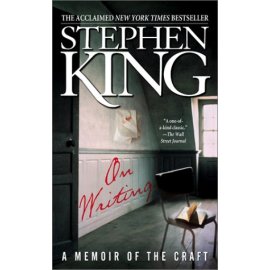
When arguably the most popular living writer offers to share his thoughts on the process of writing, even the most casual amateur writer would do well to lend an ear. Stephen King's macabre imagination has left indelible marks on the literary and cinematic landscape, but On Writing (which aptly describes itself as "a memoir of the craft) is a far quirkier addition to the prolific author's body of work. In the modest book King conveys a deep love and admiration for the craft upon which he has made a living for more than thirty years, and his passion, bolstered by an accessible, informal tone, is incredibly contagious.
The book opens with an autobiographical section detailing King's development as a writer. From publishing a neighborhood newspaper with his brother out of their basement to struggling to balance a family, a career and a drug habit, the vignettes from King's life fashion a rich and personal tapestry of artistic development.
The second half of the book contains a detailed exploration of the writer's "toolbox," rife with carefully-selected and illustrative examples from both King's own experience and from a plethora of other literary sources. At no point does King talk down to the reader, and the almost tangible sense of authority he conveys stems from his reputation and his enthusiasm, not from exclusive jargon. For fans of Stephen King, On Writing is a brief but entertaining autobiography and for fans of writing it is a friendly--but by no means exhaustive--source of advice and inspiration. On Writing belongs right next to Strunk and White's The Elements of Style on every writer's bookshelf. |
| |
"Finally--a non-scary Stephen King book that I can read!" | 2008-09-08 |
| - Reviewed By User: A2AP3K4PUQBXRV |
| I've often heard people rave about Stephen King's ability to evoke the scene and scare the wits out of people---the main reason I never could bring myself to read his books. Not that I haven't wanted to, mind you. As an aspiring writer, I came across this book and gobbled it up. A very interesting read with helpful ideas to boot. I'm even going to try to read one of his previous books so I can get a better feel for his fiction works and understand better the examples he used in this book. |
| |
"Cool" | 2008-09-05 |
| - Reviewed By User: A3TK73QWC9BT9V |
| I thought that it was cool he did this. It was a quick read, and it wasn't Earth shattering, but I thought it was insightful. Quirky guy. |
| |
"1/2 Memoir, 1/2 how to..." | 2008-09-03 |
| - Reviewed By bwookie |
An easy read. Though I skimmed much of the 1st 1/2 which is mainly memoir and a bit dull at times. Though I thoroughly enjoyed reading about King's alcohol and drug problems.
In the 2nd 1/2 King talks about writing and publishing. He explains how he works (he doesn't believe in days off) and how one might go about getting published. The actual writing advice itself is not new--leave out adverbs--don't say in 3 words what you can say with 1, etc.
I think it's a great book for a beginning writer to start with.
|
| |
"A Writer's Story; A Writer's Craft" | 2008-08-29 |
| - Reviewed By User: A3P45K6YTTLGI1 |
Mr. King's story of his development into a noted and successful writer and his description of the writing craft is only one man's story, but a unique and inspiring one. Think of it as the first half of his autobiography - may he live long and well! Also, think of it as his tutorial and elucidation on how to write something worth reading. Two tales in one unique book.
King's early life was tumultuous; the reader begins to see how the writer of rather unusual stories was formed. After learning about his extended starving artist time, the reader easily celebrates his well-earned success and acclaim. His recovery from the near-fatal attack by a minivan illustrates real grit, and the extremely positive influence of his wife on his life it wonderful. King is almost as interesting a character as he the many he give us in his best books.
The greatest value of the book, however, at least to writers and wanna-be's, is in his candid explanations on how to compose, edit, re-compose, edit, edit again, re-write, proofread, and cut until the manuscript shines. Even for a master and journeyman like Mr. King, writing top-notch fiction requires focus, sweat, and time. It's tiring. I imagine if he could work more than four concentrated hours a day he would. While his description of the author's daily life is not glamorous, it nonetheless is realistic, and illustrates how a true writer can never be satisfied NOT writing.
Whether or not you usually read Mr. King's variety of fiction, if you even dabble a small amount as a writer you can benefit tremendously from what he has included in this wonderful volume.
|
| |
"This is how it's done!" | 2008-08-13 |
| - Reviewed By User: ADV3B1ZH6ECN7 |
Until I read On Writing by Stephen King, I had never read any of his books. To be honest, since On Writing, I've only read one other of his books which I didn't like so we've come to an impasse.... however On Writing is one of the best books I've read. The first half is a memoir of his life where we learn how his early jobs and experiences inspired the ideas for his best sellers. Every thing King sees becomes an obvious cue for him to think "what if". He is a prolific writer and I admire his constant discipline at sitting down and typing his heart out. He finishes a novel and then writes a novella followed by a short story and then he's back to a new novel. The man has ideas a plenty simply by always asking himself "what if" and then writing it down.
The second half of the book is a lesson on how to write. King has much authority on the subject not only due to his global success but also because he was an English teacher before the phenomenal success of Carrie back in the 70s. He teaches how to pair nouns with verbs so we can make sentences that come alive; for example, Rocks explode, which immediately takes the reader to a place where they can envisage rocks exploding... it's all about showing the story rather than telling the reader a bunch of words.
Stephen King is a master writer and teacher. A great book which even a non-writer will enjoy because King shows the reader, his Constant Reader, just how much fun you can have.
|
| |
"Great Ideas" | 2008-08-11 |
| - Reviewed By User: A2QKI522BRQ4CU |
| If you're a writer or enjoy reading about Stephen King in depth, this is the book for you. The first half is his life and writing career and the second half is how he goes about writing. Very Freeing Ideas!!! He shows how to write using your creativity and intuition instead of constricting plotting/outlining techniques. Special book! Wonderful man. |
| |