
"Deepens outlook and thought provoking" | 2009-11-18 |
| - Reviewed By User: A3NCKA5Y0A0HMF |
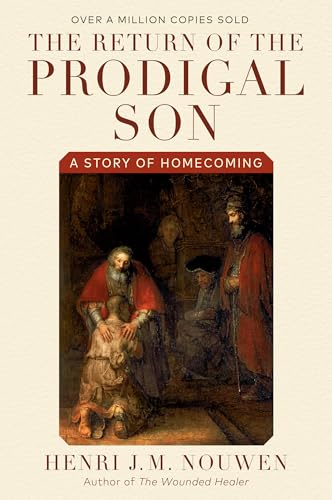
| Nouwen takes the reader through a process of looking at the relationship between all three of the characters in the story of the prodigal son. He uses the rembrandt to encourage the reader to take a closer look into the people, helping to add complexity and dimensions to what is going on in the single event captured in the rembrandt--the prodigal son returning. As Nouwen takes the reader into his personal reflections of his life, I also discover how parts of each character is in me and that I can identify with the prodigal son, the all loving father, and the bitter obedient elder son. This is a book that I will take out over and over again as a reminder of God's encompassing love for me and just how vast it is. |
| |
"Which One Am I?" | 2009-10-24 |
| - Reviewed By User: AHNN8M6EMAC9K |
| A group of us are reading THE RETURN OF THE PRODIGAL SON in our small group. We have read a lot of very good books over the five years we have been meeting (including several by Francis Schaeffer and C. S. Lewis). I rate this one among the very best. It is causing us to ask ourselves which of the characters we are more like - the Prodigal Son, the Elder Son, or the Father. Maybe we move through times of being more like one and then become more like one of the others at other times. We highly recommend the book. |
| |
"Beautiful and Inspiring" | 2009-10-08 |
| - Reviewed By User: A36NXGXIDE5421 |
| Henri Nouwen's Stories of Homecoming is truly beautiful. His honest sharing of his sincere struggles offers hope to others in similar predicaments that they also can overcome by God's love and grace. If you allow your heart to be touched, your life will also be transformed. |
| |
"An honest book on forgiveness and Christian Growth; by an even more honest writer" | 2009-08-03 |
| - Reviewed By User: A2HBS8YPRF7CPM |
I had my first opportunity to read this book in 1998. Since that time it has become my favorite give-away to friends seeking a deeper understanding of forgiveness and the maturation Christians are called to.
With each reading I gain a deeper insight into Nouwen's heart. His honesty as a writer was rare. He exposed his weakness and vulnerability. He was unique in the manner in which he spoke of the sin nature that he, and the rest of us possess; giving his reader hope in the Gospel for healing and peace.
It is easy for a reader to identify with the younger son in Luke 15. There is a release which comes from repentance that is so clearly seen in the returning prodigal. Identifying with the elder brother is quite another matter. None of us like very much recognizing ourselves in this role. It is much more comfortable to to bask in the father's forgivness as the younger son. There is something altogether unattractive about the judgment and condemnation the elder brother consigns to the one he refers to as "your son" when speaking to his father. Nouwen opens a window within each of us which sheds light on our own unforgiveness and need for true repentance.
Finally there is the altogether unfamiliar role each of us is called to as we grow in the faith; that of the father. Nouwen tells us that this is the role each of us is called to assume as we grow in the faith. It is one that comes only with a certain agony and many tears.
I told my pastor once that this short book could be digested in a couple of evenings. He took exception, saying that it was so complex that he needed to read some paragraphs four or fives time. His was the better comment. Most everyone I have given this book has been moved to a different place in their spiritual walk. Read this book, you won't be disappointed. |
| |
"I am the older son too" | 2009-07-13 |
| - Reviewed By User: A2PWB2SSZSBAI0 |
Nouwen experienced Rembrandt's painting, "The Return of the Prodigal Son" as a catalyst to spiritual growth. At first he saw himself as the younger son, then a comment from a friend: "I wonder you do not see yourself as the older son" made him identify with the resentful, envious, aloof older brother. He came full circle when he realized that he also must become the father. He incarnated that insight by becoming the pastor of the Daybreak L'Arche community in Toronto, Canada. Here he found the acceptance he had craved his entire life as well as the peace with his own father that was somehow missing in the fear and misunderstanding that seem to have characterized that relationship. This book was dedicated to his father on the occasion of father's 90th birthday. Here is a selection from Nouwen's conclusion: "But the father of the prodigal son is not concerned about himself. His long-suffering life has emptied him of his desires to keep in control of things. His children are his only concern, to them he wants to give himself completely, and for them he wants to pour out all of himself. Can I give without wanting anything in return, love without putting any conditions on my love? Considering my immense need for human recognition and affection, I realize that it will be a lifelong struggle. But I am also convinced that each time I step over this need and act free of my concern for return, I can trust that my life can truly bear the fruits of God's Spirit."
|
| |
"The Return of the Prodigal Son" | 2009-07-03 |
| - Reviewed By User: A2NDLQOMNOH2KI |
The Return of the Prodigal Son by Henri Nouwen was a wonderfully spiritual book that spoke to my soul. I chose to read this book because the parable of the Prodigal Son always bothered me. It just wasn't fair that the younger brother could just come home after insulting his father by taking his inheritance, engaging in wine, women, and song as well as other debauchery. What about the elder son? He was the "good son". He did everything he was supposed to. He put aside his own selfish desires. And to what end? His father killed the fatted calf and the party started the day the younger son realized the error of his ways.
So I turned to this book for insight into the parable and into myself. Several aspects of the book struck me as important. First was the idea that each character in the story was lost in his own way. I choose to focus on the elder son and realize that Nouwen was correct in saying that resentment and bitterness, not to mention judgment and condemnation is damaging to the human heart. The key to leaving these fruitless emotions behind and moving back into the light is trust. God seeks me and wants me. I am His Beloved. Nouwen addresses each character in the parable, their weaknesses and their strengths, and ultimately if we are willing to look, we can see a piece of ourselves in the father, the elder son, and the younger son.
An added feature that greatly enhanced the lessons learned and which I did not expect was the art history lesson. Keeping in mind Rembrandt's own personality and fragility, his own interpretations were brought into the painting of the parable. Having a snapshot of the time period further added clarity.
I highly recommend this book to any person, Christian or seeker. Nouwen added insight to story and points the reader in the right direction; trust in Our Father who loves us and wants us regardless of our failings.
|
| |