

Drawing Lessons from the Great Masters
| Drawing Lessons from the Great Masters |
Manufacturer: WATSON-GUPTILL PUBLICATIONS
UPC:
978082301401 Retail Price: $21.95 #Deals:
Avg. Rating:
|
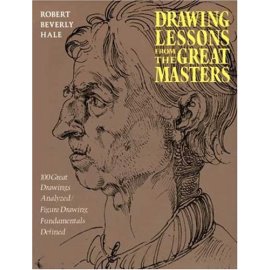
This famous work enables artists to learn drawing as those of the past did -- by study and emulation of the masters. |
Available from 6 stores - Select your deal and buy the Drawing Lessons from the
"Where can I buy a Drawing Lessons from the?" At all of these merchants listed below. Click any of the deals below to buy now on the merchant's website.
Overview of current deals for the Drawing Lessons from the Great Masters:
- 4 merchants offer International Shipping or Worldwide shipping.
- 1 merchant has Express Shipping options.
Drawing Lessons from the Great Masters Specs:
| Product Name | Drawing Lessons from the Great Masters |
| Manufacturer | WATSON-GUPTILL PUBLICATIONS |
| Product Number MPN | 0823014010 |
| Retail Price | $21.95 |
| EAN-14 | 09780823014019 |
| UPC | 978082301401 |
| Specifications | |
| Title | Drawing Lessons from the Great Masters |
| ISBN | 0823014010 |
| Author(s) | Robert Beverly Hale |
| Release Date | August, 1989, 1989-08-01 |
| Format | Paperback |
| Num. of Items | 1 |
| EAN | 9780823014019 |
| Weight | 0.5 lbs. |
| Deal first added on: | 20-January-2004 |

Latest 6 Reviews
Here is what people are saying about the Drawing Lessons from the Great Masters
"Insightful and inspirational" | 2009-10-09 |
| - Reviewed By teohyc |
Watch Video Here: http://www.amazon.com/review/RKAE9I3KRZOJB Drawing Lessons From the Great Masters is an art book that teaches by looking at the art fundamentals used by great art masters themselves -- Michelangelo, Leonardo Da Vinci, Rodin, Goya, Rembrandt, among others.
There are 100 master drawings analysed by Robert Beverly Hale on the fundamentals such as line, light and planes, mass, position and thrust, and anatomy. These are all figure drawings. Each illustration is printed full on one page with a certain section selected for analyzing on the next. The commentary is simple and concise, providing great insight to what these artists were thinking. Many of these pieces are really sketches but when you realised the thought put behind every stroke and what the artist was trying to show, you'll instantly be enlightened.
At the end of this book, even if you can't draw yet, you'll be able to identify the difference between a good and bad drawing. And when you draw, you'll remember the principles.
This is a really useful and inspirational reference book, great for beginner to advanced artists.
Robert Beverly Hale has also authored Anatomy Lessons From The Great Masters, which uses the same teaching style here but focusing on anatomy drawings.
(There are more pictures of the book on my blog. Just visit my Amazon profile for the link.) |
| |
"A great study on the mental basics of figure drawing." | 2009-05-17 |
| - Reviewed By gbeaudette |
Robert Beverly Hale's drawing books are some of the first one I go to on my shelf when looking for drawing advice. Drawing Lessons from the Great Masters is terrific book to get a handle on the mental aspects of drawing.
This book is a little more generic than his others, focusing more on a general approach to drawing and a very basic overview of anatomy.
The primary truth Hale mentions that many students fail to realize and some other drawing books skip over is that drawings aren't supposed to be a copy of real life. They're just symbolic depictions of life.
If a limb needs to be moved to make a better drawing, or if the entire lighting plan needs to be redone in your head, do it. The model is just the initial suggestion on which to base a drawing.
Where Hale's books shine is that he uses old master drawings for his examples. Basic art concepts such as conceiving body forms as basic geometric shapes to help control and simplify details are much easier to understand when you can see it in a Rubens or DaVinci drawing.
I will admit that some of his advice (like buying bones to study anatomy) may sound a tad odd. But you should remember that this book is 20 years old and draws on teaching experience for 30+ years before that. However, other than that the lessons in this book are just as important and relevant now and when they were first written.
I have a ton of drawing books, (almost literally) but this and Robert Beverly Hale's other books are some of my favorites.
|
| |
"The Timeless Fundamentals of Drawing" | 2008-06-12 |
| - Reviewed By nickpayne |
This book is a great addition to the student of drawing's library. The author does a superb job of analyze some excellent examples of classical drawing and elucidates the formal and structural concepts in each. Although this book does not provide very much in the way of "step by step" style technical instruction, it does provide the reader with a way of conceptually approaching a drawing.
The author demonstrates where the great artist used a cylinder, or a sphere to conceptualize a part of the subject's anatomy. He shows how lines are modulated to give varying degrees of tone and shape to the figure. Many of these ideas will stew around in your head as you approach your own drawing projects. Eventually, you will notice that you are more aware of certain parts of the form and that these are being incorporated into your work. Overall, this book is a very interesting and enjoyable way of delivering basic drawing concepts to a student reader. |
| |
"Excellent Reference" | 2008-02-18 |
| - Reviewed By johnsonken8 |
| This is one of the "timeless" drawing reference books every artist should look at when he/she needs inspiration. Hale picks some of the most dynamic life drawings by the old masters--Leonardo, Ingres, etc.--and disects them in terms of composition, tone, thrust, etc. He is right on in his suggestions that artists should study human and animal surface anatomy to understand the figure. I found his discussion of light and shadow especially instructive. |
| |
"Fantastic" | 2008-02-16 |
| - Reviewed By User: ACVFKB1CPT929 |
| More of a philosophical approach to drawing than instructional. But, often i find it enlightening to learn HOW to think...more so than WHAT. A great artist can synthesize his ideas rather than simply comprehend them. This book exemplifies and necessitates this philosophy. |
| |
"Analysis is great" | 2007-10-03 |
| - Reviewed By annking12 |
| I like that he has a full page to show the drawing and on the facing page he has a smaller version with commentary. He places capital letters on the drawing so you can see exactly which line or shape he is discussing. |
| |
Last updated: Nov 23, 2009 at 22:20 EST. Pricing information is provided by the listed merchants. GoSale.com is not responsible for the accuracy of pricing information, product information or the images provided. Product prices and availability are accurate as of the date/time indicated and are subject to change. Any price and availability information displayed on amazon.com or other merchants at the time of purchase will apply to the purchase of this product. As always, be sure to visit the merchant's site to review and verify product information, price, and shipping costs. GoSale.com is not responsible for the content and opinions contained in customer submitted reviews.