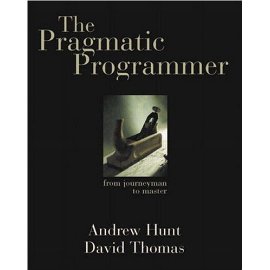

"Some good nuggets but a bit thin" | 2008-07-25 |
| - Reviewed By User: A350QPQQI9FLG3 |
The authors provide one with some good advice on topics that are often overlooked. There is a kind of gap that exists in the education of programmers. There are lots of academic texts and courses, and there are lots of "how to" texts and courses. There is not a lot of published works or courses in areas in between. This is actually where most the craft of programming takes place. Most of us who write software for a living have to glean the best practices of our craft from many different sources. The authors have hit the in between sweet spot.
The area of the subject matter is pertinent and much of their advice is good. However, they don't back up a lot of what they say. I felt, like other reviewers, there were a lot of unsubstantiated platitudes.
Another criticism I have is that their advice is very UNIX centric. The authors claim that their advice is platform neutral, but then constantly bash programming practices that evolved from the windows camp. Much of their advice tends to be more pertinent for those working in a UNIX environment. The bottom line is that a pragmatic programmer uses the best tool for the job. I didn't feel that the authors practiced what they preached.
I believe that this book would be very good for younger people who are starting out in the trade, although many of the ideas are good to have continually reinforced. I think it would also be better suited to those who spend more of their time in the UNIX environs.
Another author that concentrates on craft, but spends a little more time backing up his thoughts is Steve McConnell. But Despite my concerns, it is still a worthwhile read. |
| |
"Must-read for anyone working with or creating software" | 2008-05-04 |
| - Reviewed By rnc000 |
| Enjoyable and short to read. Provides timeless and technology-agnostic guidelines on how to create software. A must read for all software engineers. |
| |
"A must read for every programmer" | 2008-02-27 |
| - Reviewed By vcraescu |
The book is a must read for every serious programmer. Authors shares their expertise in software development and the book is filled with a lot of advises and tehnologies to be used in software development process. If you are a pragrammtic programmer or want to become one, the book is a must read. It will confirm what you will already know and bring new things to you. The book can be a learn start point for other technologies and techniques you need to study. Reading the book, I found out about a lot of new things i didn't even know they exist, things that i need to study more.
The reading style is very easy. The book is written in a chatty style, a pleasure to read it.
I 100% recommend this book to everyone who is involved in software development and want to progress in career. |
| |
"needed knowledge" | 2008-01-27 |
| - Reviewed By User: A3CIG6YSBVM7UI |
| This book is brilliant. It helps reinforce ideas with wit so the information isn't in one ear and out the other. This book will definitely be on that i tell others to buy. |
| |
"A Fork in the Road of my Career" | 2007-10-20 |
| - Reviewed By User: A22MZQ3YZZQEXJ |
Since I was young I wanted to be a programmer. I got my first development job only a few years ago, and have spent much of my free time reading blogs and the like. The problem with that was there were too many conflicting schools of thought on too many different methodologies and practices.
I found this book only a few months ago, and poured through its pages. After finishing it, my approach to software development has changed so drastically that I would say it changed my life. That may be a dramatic way of saying it, but I think it certainly did. I began writing tools that would allow me to follow the simple development guidelines in this book.
For instance, after reading the section about the DRY principle (Don't Repeat Yourself), I wrote a script that would read through my application's codebase and find similar chunks of code, and identify them. I ALWAYS found a case where I could refactor, writing easier to follow code, and consolidate repeated code into one area.
Instead of spending tons of time trying to filter out the noise of the blogosphere, buy this book, read it, and then live it (my apologies for any "religious" connotations...) |
| |
"Good principles, but they don't deep on them" | 2007-08-14 |
| - Reviewed By User: AF2NE0EM3EUEZ |
| It's undeniable that this book is full of good values, principles, and techniques that programmers should strive to follow in order to delivery good software. In spite of it, almost none of the topics covered by the authors go deep into the subject, what opens space, in my opinion, for future improvements. |
| |
"It is far overrated" | 2007-07-27 |
| - Reviewed By yujunliang |
I have read the book mainly based on its high rate in the software development topics.
I agree with almost all the reviews ranging from 1 star to 5 stars.
Why I gave 1 star only is to bring down the overall rating. I have no personal contact with the authors and I don't think it is a bad book either, it is just shallow, as pointed out by many reviewers already.
If you are new to software development, it is fine for you to read it, you will learn something from the book, but I would say, Code Complete and Code Craft are far more interesting and systematic books than this one.
If you are a senior developer like me, please don't waste your time and money on this book, it is not for you. You probably could write some book like this if you are determined enough.
Sorry, authors, please forgive me. I am not attaching you at all, I just wanted to be fair.
Actually, I was kind of stupid since I didn't understand the book title very well, it already said there, in black and white, "From Journeyman to Master", what it means? It means if you are a junior developer, this book can shorten your learning curve to become a master.
Hope this review helps you make your decision.
Thanks |
| |
"This book is a must for every serious programmer" | 2007-04-04 |
| - Reviewed By User: AEFJG6HGGKYB0 |
| This book is the best book that covers programming and how to work as a programmer that I have ever read. It is down-to-earth, funny and with lots of insights. The way it is structured, with very direct recommendations, make it an ideal book to use as a base for team consensus when it concerns the really important parts of software development. This book really shines. |
| |
"Provides non-programmers with fascinating insights into professional tricks of the trade" | 2007-04-01 |
| - Reviewed By eaustrew |
I come to this book from a slightly odd perspective. Although I have some programming experience, it is very minor, and my current job is focused on strategy and project management rather than the nuts and bolts of coding. I bought the book hoping that it would give me a glimpse into the minds of the senior engineers I work with every day. This it did, quite successfully.
There are seventy numbered tips divided into rough categories. The challenge for me was to distinguish those that nearly all programmers would agree with ("always use source control") from those that may represent a preference of the author ("design with contracts"). An obvious way of doing this would be to review every tip with a programmer you respected. But if you plan to do this, try to buy the poor guy a beer afterwards. That's a lot of tips.
I also found very quickly that the subtitle of the book was no joke. These tips will help propel a programmer from "journeyman to master", but they are a stretch if, like me, you are a relative beginner. Nothing written here is conceptually outside the grasp of anyone who has done coding outside the classroom, but many of the implications and details escaped me until I talked them over with experienced professionals. It doesn't pretend to be a book for beginners, and by gum, it's not.
There is also a very heavy emphasis on testing and automation throughout the text. While much of the time this is obviously a good idea, it is focused on a certain type of programming whose core challenges are on the back end, and not user facing. Perhaps there is a method of testing that would catch the UI errors and usability problems that crop up so often when developing for the web, but if they were described I didn't catch them.
I would recommend this book to anyone working with programmers on a professional basis. It helps to understand some of their tools and processes, although not every engineer agrees with every tip presented. If you're learning how to program yourself though, I recommend you wait on this one till you're through a few more introductory texts. |
| |
"A must for junior programmers, good reference for senior developers" | 2007-03-21 |
| - Reviewed By duski |
This book is well written and contains valuable information about software development and practices.
It is highly recommended if you are starting in this field as this will set you up and get you going in the right direction.
If you are, however, an experienced software developer you can quickly skim through it. There was very little new for me. My colleagues and I already follow many of the practices mentioned in the book. It is good to have it on a bookshelf as a reference anyway.
|
| |